What Is the Emerald Ash Borer and Why Should You Care?
The emerald ash borer (EAB) is an invasive beetle that has devastated ash tree populations across North America since its discovery in Michigan in 2002. This metallic green insect has now reached the Niagara region, including St. Catharines, where it poses a serious threat to the ash trees that line residential streets and shade backyards. The larvae of this pest tunnel beneath the bark of ash trees, disrupting the flow of water and nutrients that keep the tree alive. Without intervention, an infested ash tree will typically decline and die within three to five years of initial infection.
For homeowners in St. Catharines, the presence of EAB means that every ash tree on your property deserves attention. Even a healthy-looking ash tree may already be harbouring beetle larvae beneath its bark. The economic and ecological impact of EAB has been enormous, with millions of ash trees removed across Ontario and beyond. Understanding the threat and recognizing the early warning signs can help you make informed decisions about treatment or tree removal before the problem becomes severe.
Recognizing the Signs of Emerald Ash Borer Infestation
Identifying EAB damage early is crucial because treatment is most effective when the infestation is caught in its early stages. One of the most distinctive signs of emerald ash borer activity is the presence of small, D-shaped holes in the bark of the tree. These exit holes, typically about 3 to 4 millimetres across, are created when adult beetles emerge from beneath the bark in late spring and early summer. If you notice these characteristic D-shaped holes on your ash tree, it is a clear indication that EAB is present and active.
Beyond the D-shaped holes, there are other symptoms to watch for. Ash trees infested with EAB often display crown dieback, where the upper branches gradually lose their leaves and become thin and sparse. The canopy may appear thin or asymmetrical, with dead branches becoming more visible as the season progresses. You may also notice vertical cracks or splits in the bark, which occur as the tree attempts to compartmentalize the damage caused by the tunnelling larvae. Additionally, woodpecker activity may increase around an infested tree, as these birds feed on the beetle larvae beneath the bark. If you observe any combination of these signs on your ash tree, contact Garden City Tree Trimming at (289) 273-4978 for a professional assessment.
Treatment Options for Emerald Ash Borer in Niagara
If your ash tree is infested with EAB but still has a reasonable chance of survival, several treatment options are available. The most common and effective approach is the application of systemic insecticides, which are absorbed by the tree and circulate through its vascular system. These treatments kill beetle larvae as they feed on the tree's inner bark. Systemic insecticides are typically applied either by trunk injection or soil drench, and they must be administered by a certified arborist or licensed pesticide applicator. Treatment is most successful when applied to trees in the early stages of infestation and should be repeated annually or every other year to maintain protection.
Another emerging treatment option involves the use of biological controls, such as parasitoid wasps that prey on EAB larvae. These natural enemies show promise in research settings, though their availability and effectiveness in a residential landscape context remain limited. For trees showing severe crown dieback or advanced infestation, treatment may not be cost-effective or feasible. In such cases, tree removal is often the most practical solution. Garden City Tree Trimming can help you evaluate whether your ash tree is a good candidate for treatment or whether removal is the better choice. We recommend obtaining a professional arborist assessment to guide your decision and ensure compliance with any local regulations regarding ash tree management.
When to Remove an Ash Tree
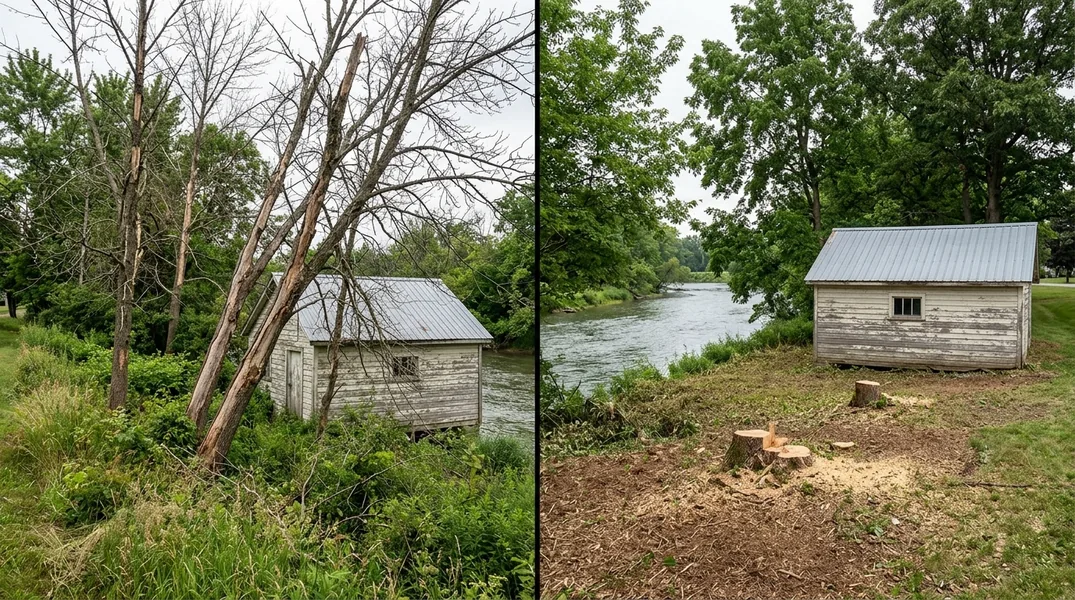
There are several circumstances in which removing a dying or dead ash tree becomes the most sensible option. If an ash tree has already lost more than 50 per cent of its crown to EAB damage, recovery through treatment is unlikely. A tree in advanced decline poses safety risks, particularly if dead branches overhang a house, driveway, or area where people gather. Dead or dying ash trees are also more prone to failure during storms, and their structural integrity can deteriorate rapidly once the infestation has progressed significantly. In these situations, professional tree removal protects your property and eliminates the ongoing cost and uncertainty of attempted treatment.
Another important consideration is the cost of long-term management. Systemic insecticide treatments are not one-time expenses; they require ongoing applications to maintain effectiveness. For a large ash tree or multiple infested trees, the cumulative cost of annual treatments over several years may exceed the cost of removal and replacement with a disease-resistant species. Additionally, if your ash tree is located in a position where its loss would significantly impact your landscape, you may choose to invest in treatment and then plan for a replacement tree as a long-term strategy. Garden City Tree Trimming can provide guidance on the most economical and practical approach for your specific situation. We offer professional tree removal services and can discuss replanting options to restore shade and beauty to your property.
Ash Firewood Movement Restrictions in Ontario
If your ash tree must be removed due to EAB infestation or any other reason, it is essential to understand the regulations governing the movement and use of ash wood. Ontario has implemented strict rules to prevent the spread of emerald ash borer to new areas. Ash firewood and untreated ash wood products cannot be transported across certain boundaries without a provincial compliance certificate or exemption. These restrictions are in place because EAB larvae can survive in firewood and be transported to uninfested regions if proper precautions are not taken.
When you hire Garden City Tree Trimming for tree removal, we are familiar with these regulations and can ensure that ash wood is handled responsibly. Depending on the circumstances, ash wood may be chipped on site, left for local use only, or transported to an approved facility. We will advise you on what options are available and compliant with provincial guidelines. If you are considering using ash firewood from your own property, verify the current restrictions with your local municipality or the Ontario Ministry of Natural Resources and Forestry before moving or storing the wood. Proper handling of ash wood is a shared responsibility that protects the broader forest ecosystem in Ontario.
How Garden City Tree Trimming Can Help
Navigating the decision between treating and removing an ash tree requires professional expertise and an understanding of your specific situation. Garden City Tree Trimming has the knowledge and experience to assess the health of your ash tree, identify the extent of EAB damage, and recommend the most appropriate course of action. Our team can discuss treatment options with you, explain the costs and likelihood of success, and provide clear information about removal and disposal if that becomes necessary. We take the time to understand your goals for your property and help you make a decision that balances cost, safety, and landscape aesthetics.
If you have noticed D-shaped holes, crown dieback, or other signs of emerald ash borer damage on an ash tree in your yard, do not delay in seeking professional advice. Early intervention can make a significant difference in the outcome. Contact Garden City Tree Trimming today at (289) 273-4978 to schedule a free estimate and speak with an arborist about your options. We serve St. Catharines and the surrounding area, and we are ready to help you protect your property and make informed decisions about your ash trees.
Looking for a professional in St. Catharines? Garden City Tree Trimming responds quickly for all your tree trimming needs.
Get a free estimateOur services : Tree Removal · Tree Trimming · Tree Pruning