



Tree disease diagnosis in St. Catharines is an essential first step when you notice signs of decline in your trees. Our ISA Certified Arborists inspect the crown, trunk, root flare and surrounding soil to identify decay fungi, cankers, boring insects and root problems. Early detection can save a mature maple or oak that might otherwise require removal. The St. Catharines area's clay soils, freeze-thaw cycles and mature street trees create ideal conditions for fungal infections and pest pressure. We provide a written recommendation: treat, prune or remove. This diagnosis also supports any permit application the City of St. Catharines may require for a private tree removal. Contact us at (289) 273-4978 for a free estimate.
Why disease diagnosis matters in St. Catharines
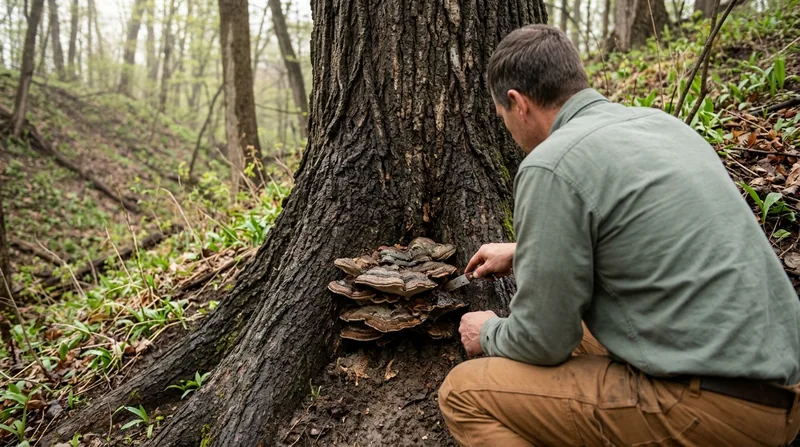
Trees in the St. Catharines area face multiple threats: emerald ash borer has devastated ash populations across in St. Catharines and the surrounding area, while decay fungi exploit wounds from ice storms and poor pruning. A sugar maple or red oak showing bark cracks, oozing cankers or sparse foliage may recover with targeted pruning, or it may be beyond treatment. Without professional inspection, you risk a sudden failure that damages property or injures someone nearby. Diagnosis gives you clarity and options before the tree becomes a liability.
- We examine the entire crown for dead branches, thin foliage and signs of pest activity.
- We probe the trunk and root flare to detect soft wood, cavities and fungal fruiting bodies.
- We assess soil compaction and root collar damage that accelerate decline.
- We identify the specific pathogen or pest and recommend treatment, structural pruning or removal.
- We document findings in a written report suitable for insurance claims or municipal permits.
Early intervention often costs far less than emergency removal after a tree fails. Our diagnosis helps you make informed decisions and protect your property.
Info key: A mature oak showing signs of decay in Port Dalhousie may recover with branch removal and targeted pruning, saving $2,000 to $4,000 compared to full removal and stump grinding. Early diagnosis is your best investment.
How we diagnose tree disease in the St. Catharines area
Our inspection process is systematic and thorough. We arrive with tools to measure tree lean, assess wood hardness and collect samples if needed. We photograph damage and document GPS coordinates. The entire assessment typically takes 30 to 60 minutes depending on tree size and complexity. We then compile a written report with clear recommendations and a timeline for action. If treatment is possible, we outline the cost and expected outcome. If removal is necessary, we explain why and discuss stump disposal options.
- We climb or use a bucket truck to inspect the upper crown and identify internal decay.
- We use a resistograph or sonic tomograph to measure wood density and detect hollow sections.
- We examine the root collar and base for girdling roots, soil-borne pathogens and structural weakness.
- We photograph damage and create a written diagnosis with colour images and specific findings.
- We discuss treatment options, timelines and costs before leaving the property.
This structured approach ensures nothing is missed and you have a professional record to guide your next steps.
Real example: A birch in Martindale showed sparse leaves and bark cracks. Our diagnosis identified canker disease combined with root girdling. We recommended branch removal and soil aeration. The owner chose treatment over removal, spending $450 instead of $1,800. Twelve months later the tree recovered.
Diagnosis methods and what we look for
| Method | What we detect | Outcome |
|---|---|---|
| Visual inspection and probing | Bark cankers, cavities, fungal fruiting bodies, oozing sap, dead branches | Identifies active decay and pest entry points |
| Resistograph or sonic tomography | Internal wood density, hollow sections, decay columns inside the trunk | Reveals hidden structural weakness before failure |
| Root collar and soil assessment | Girdling roots, soil compaction, root collar damage, waterlogging | Identifies environmental stress accelerating decline |
| Sample collection and lab analysis | Specific fungal or bacterial pathogens, emerald ash borer presence | Confirms diagnosis and guides targeted treatment or removal |
Each method builds on the others to create a complete picture of the tree's health and prospects. We never rely on visual signs alone.
Permitting and documentation in St. Catharines
The City of St. Catharines may require a permit for a private tree removal, and a professional arborist report supports that application. Our written diagnosis includes all information a municipal reviewer needs: species, diameter, health status, reason for removal, and site conditions. Rules and thresholds differ across the St. Catharines area, so we recommend checking with your local municipal office before proceeding. If you need an arborist report for a permit application, we provide this as a separate service with detailed risk assessment and recommendations.
We also respect all safety distances around your private electrical service entrance. If a tree is in contact with the public distribution network operated by your local utility or Hydro One, we refer you to them for clearance before we proceed. Our crew works only on the customer's side of the service line, maintaining proper approach distances at all times.
Once we have diagnosed the tree and you have decided on treatment or removal, we handle the next steps. For tree removal, we manage all debris and can arrange wood chipping or stump grinding to restore your yard. For pruning and treatment, we schedule work during the optimal season and follow up to monitor recovery.
Ready for a diagnosis? Call Garden City Tree Trimming at (289) 273-4978 or request a free estimate online. We serve St. Catharines and the surrounding municipalities including Lincoln, Grimsby, West Lincoln, Pelham, Thorold and Wainfleet. Our ISA Certified Arborists respond to calls within 24 hours and can often accommodate same-week inspections.
Prices Tree Disease Diagnosis in St. Catharines — Indicative pricing
| Service | Price | Details |
|---|---|---|
| Tree disease diagnosis (single tree) | From $90 | Visual inspection, probing, written report with recommendations |
| Diagnosis with resistograph or sonic tomography | From $150 | Includes internal decay mapping and structural assessment |
| Diagnosis with sample collection and lab analysis | From $200 | Identifies specific pathogens; supports permit applications |
| Multiple trees or complex property assessment | On estimate | Free site evaluation; pricing based on scope and tree count |
| Travel | Included | in St. Catharines and the surrounding area |
| Free estimate | Always free | Response within 24 hours; call (289) 273-4978 |
Indicative prices; free, personalized estimate within 24h at (289) 273-4978.